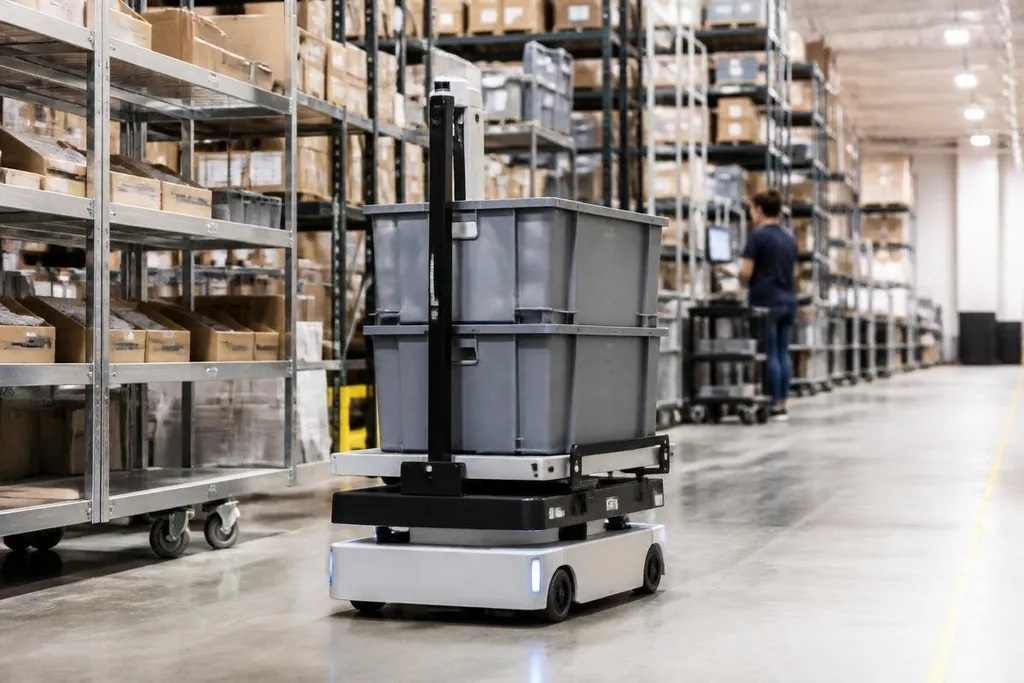
A robot creates the most value when it takes on a task people repeat for hours and the result can be checked with a number. That usually means moving goods, inspecting parts, handling hot material, or collecting data in places that are unsafe or hard to reach.
- Repetitive work gives robots their clearest business case.
- Workers benefit when robots remove lifting, heat, height, or exposure.
- The buyer still needs a task that fits the robot’s reach, speed, and cost.
The first winners are task owners
A warehouse manager gains the clearest benefit when a robot can move totes along a fixed route, scan stock, or bring shelves to a worker. The work has set locations, repeatable steps, and a measurable result such as items moved per hour.
Manufacturers see a similar pattern with robot arms. An arm can load a machine, weld a joint, apply adhesive, or pick parts from a tray. These jobs suit robots because the factory controls the lighting, floor layout, tools, and part position.
That control matters. A robot designed for one station may work well there and struggle on a mixed line with changing parts. The buyer has to check the full task, including setup time, safety stops, maintenance, and the handoff to people.
Workers benefit when the task carries a physical cost
Robots can take work near heat, sharp edges, heavy loads, toxic materials, or moving equipment. Inspection drones can collect images from roofs, towers, and other high structures, while ground robots can enter spaces where a person would need special protection.
The benefit for workers depends on the system around the robot. A machine that removes lifting from one step may add monitoring, loading, or repair work somewhere else. Good planning measures the whole job rather than counting one task in isolation.
This also changes the skills a site needs. Operators may set routes, check sensor data, clear faults, or change a gripper. Maintenance teams need access to spare parts, software updates, and training that matches the robot they run.
Those new roles also shape who gains from a robot. Reports on robotics companies and machines can tie a claim to a named task, site, and result, giving you a way to judge whether the system fixes a real bottleneck or shifts work elsewhere.
Customers benefit when the robot fixes a real bottleneck
A hospital may use a mobile robot to move supplies between departments. A farm may use a robotic system to inspect crops or remove weeds. A construction team may use a robot for layout work, drilling, or site scans.
These uses can help when delays, distance, or exposure are the main problem. They make less sense when the task changes every few seconds, the work area has no stable map, or a trained person can finish the job faster at lower cost.
The word “autonomous” also needs a close look. It may mean the system follows a mapped route without constant input. It may not mean the robot can handle a blocked path, a new object, or a damaged part without help.
Who captures the money
The company buying the robot may gain higher output or lower injury risk, but the result is not automatic. It needs a clear measure, a safe work plan, and a cost record that includes installation and service.
Robot makers gain orders when they can repeat the same setup across many sites. Integrators gain work by connecting the robot to conveyors, databases, safety controls, and existing equipment.
Workers gain the most when the rollout removes a hard task and keeps people involved in judgment and repair.
I'd put the strongest case in boring places: fixed routes, repeated picks, machine tending, and inspection rounds. Those jobs give a robot enough structure to work and give the buyer enough data to check the result.
A practical buying check
Before calling a robot a fit, check these points:
- Name the task: Write the exact motion, object, distance, and handoff.
- Measure the baseline: Record time per cycle, errors, stoppages, and labor hours.
- Check the site: Confirm floor space, lighting, network access, loading points, and safety zones.
- Price the whole system: Add integration, training, maintenance, spare parts, and downtime.
- Set a human fallback: Decide who takes over when the robot stops or meets an object it cannot identify.
- Define the test: Pick a result such as cycle time, error rate, or completed rounds before the trial starts.
The people who benefit most are not tied to one industry. They run repeatable work with a clear cost, a known hazard, or a delay that can be measured. The next useful question is whether the robot can keep that result after the demo ends.